
Cybersecurity Behind Bars: How the DopeScope neutralizes threats posed by contraband mobile devices
How do prisons prevent cybercrime from behind bars? It’s surprisingly harder than you think.
The burst of technological advancement in the past 30 years has caused many institutions to fall behind in cybersecurity. This rapid rise in digital tools vastly outmatches our correctional facilities ability to guard against threats cybercriminals. Cell phones, for example, have become more and more sophisticated over time. If smuggled to the wrong person, these cell phones can be used to coordinate an attack outside or inside the prison. Cybercriminals exploit any weaknesses in a prison’s security systems to wreak havoc. Finding novel ways (like the DopeScope 2.0) to protect everyone in your prison from the guards to the inmates should be top priority.
Let’s take a look at one of the biggest threats to security: cell phones.
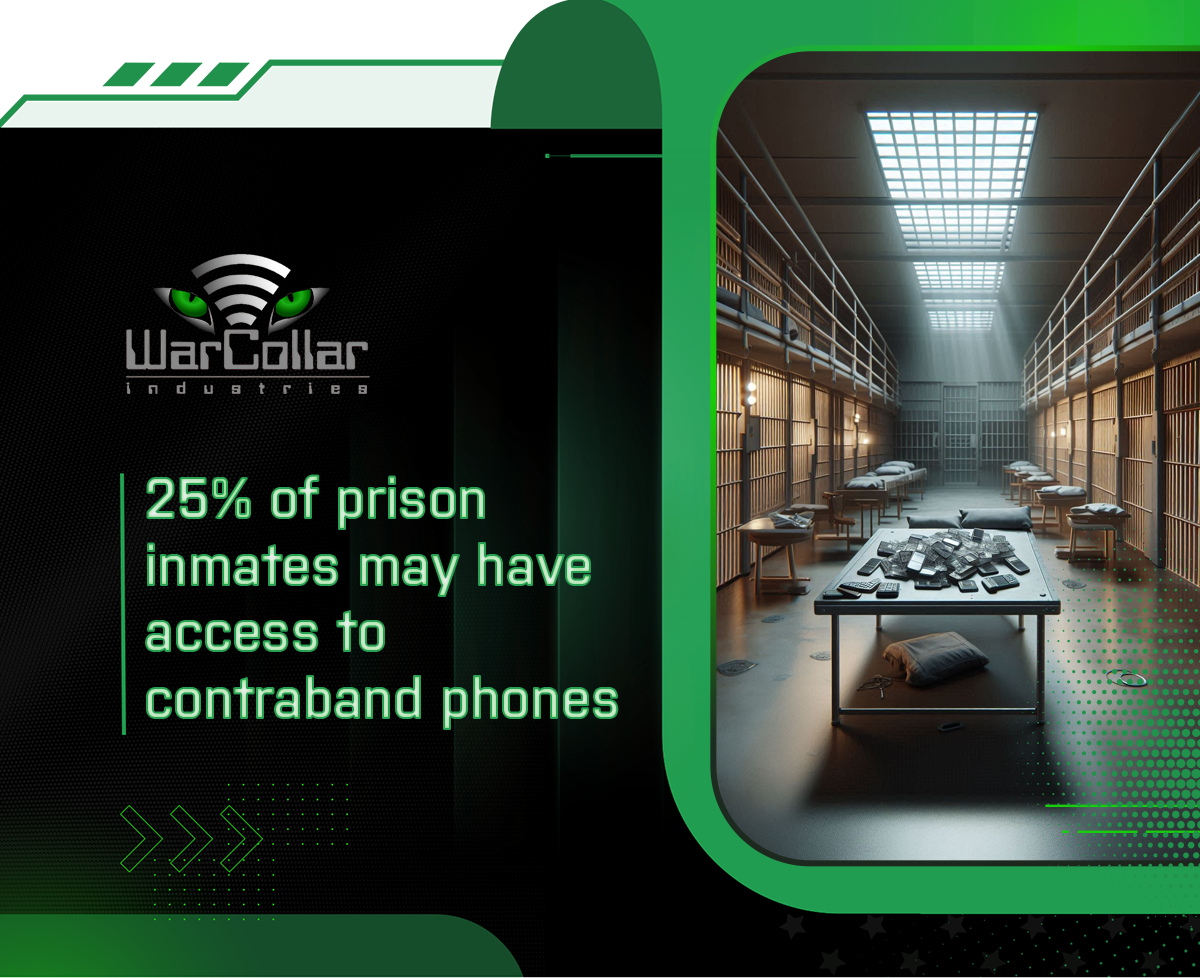
A study of 20 state corrections departments in 2020 found that over 25,000 cell phones were smuggled into correctional facilities across the U.S. In 2021, Georgia Department of Corrections (DOC) reported confiscating over 15,000 cell phones in just one year. That’s just for the state of Georgia! And these numbers only represent what was confiscated. It is estimated that 25% of inmates may have access to contraband mobile devices.
According to the correctional officers themselves, cell phones present the number one threat to the jail’s security apparatus as they are often used to coordinate criminal activity outside and inside the prison. Prison officials say that cell phones also allow inmates to access all sorts of sensitive information within the jail itself. Cell phones can even be used to disrupt prison systems which jeopardizes the safety of both the correctional officers and inmates.
Finding ways to combat the flow of contraband in prisons is oftentimes the main challenge to securing any facility. Balancing the delicate line between an inmate’s fundamental right to communication and the facility’s overall security can be a daunting task. After all, not all inmates are smuggling contraband into jail. Not all inmates will use a smuggled cell phone for nefarious reasons. The reality is, however, that some do.
Enter the DopeScope 2.0
Finding an ethical way to combat this issue is key in maintaining security in a facility. One way to do this is by eliminating the opportunity for an inmate and/or a correctional officer to get hurt while searching for electronic contraband.
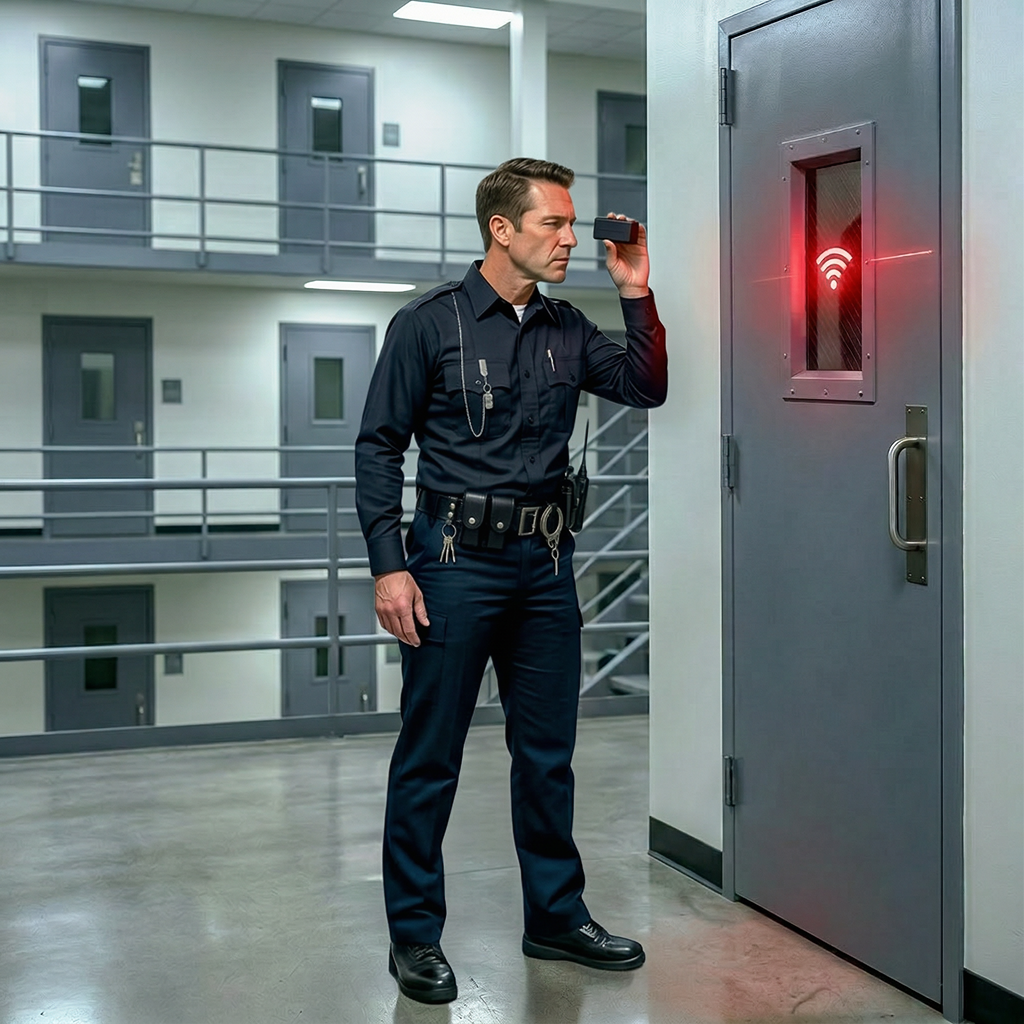
The DopeScope 2.0, developed by WarCollar Industries CEO and Founder Gene Bransfield, helps identify rogue access points in your network, as well as devices accessing or attempting to access these networks. It is a directional Wi-Fi and Bluetooth Sniffing device that fits in the palm of your hand. This device can be used to detect cell phone usage in the facility without human intervention. By limiting how many searches you’re doing, this strategy could have a positive effect on prison guard attacks by inmates.
How It Works
The DopeScope 2.0 is a self contained rechargeable device that is simple to use and requires very little training. The DopeScope 2.0 powers on with a single switch and powers up to display the Main Menu. From the Main Menu the user can select a Wi-Fi Scan, a BLE (Bluetooth Low Energy) Scan, a Bluetooth Classic Scan, or a Probe Detection Scan.
The Wi-Fi Scan displays a list of all Wi-Fi networks in range of the DopeScope 2.0. The user can then select a network and see a list of all devices on that network. The BLE Scan displays a list of all BLE devices in range of the DopeScope 2.0 - examples of BLE devices include AirTags, AirPods, and some cell phones. Bluetooth Classic Scan will display classic Bluetooth devices that are in pairing mode. The Probe Detection scan locates devices with Wi-Fi that are actively looking for a Wi-Fi network to connect to - cell phones commonly use WiFi probing.
On all scans, the devices or networks shown have a signal strength measurement associated with them. This, combined with the DopeScope’s directional antenna, allows the user to locate the device or network access point.
Put Simply: When the DopeScope 2.0 is pointed in the direction of the device or as the user gets closer to the device the signal strength increases. This allows the user to zero in on the location of the device.
Get Started
Learn more about the ins and outs of using the DopeScope 2.0 on our product page: https://www.warcollar.com/dopescope
Send us an email with your questions: contact@warcollar.com
Check back soon for video instructions!
Sources:
https://digitalcommons.odu.edu/cgi/viewcontent.cgi?params=/context/covacci-undergraduateresearch/article/1030/&path_info=Kelly_Himelwright_Cybersecurity_and_Correctional_Institutions.pdfhttps://www.urban.org/sites/default/files/2024-01/The_Scope_Severity_and_Interdiction_of_Contraband_Cell_Phones_in_Correctional_Facilities.pdfhttps://theintercept.com/2015/11/11/securus-hack-prison-phone-company-exposes-thousands-of-calls-lawyers-and-clientshttps://securityjournalamericas.com/how-many-correctional-facilities-are-in-the-ushttps://www.ussc.gov/research/quick-facts/special-edition-prison-contraband
https://www.youtube.com/watch?v=eXsK3UVphBk&t=39s
https://www.soc-usa.com/news/combating-contraband-mobile-devices-in-correctional-facilities-a-new-approach-to-security