
A Look Back at How America Laid the Groundwork for Modern Intelligence Services
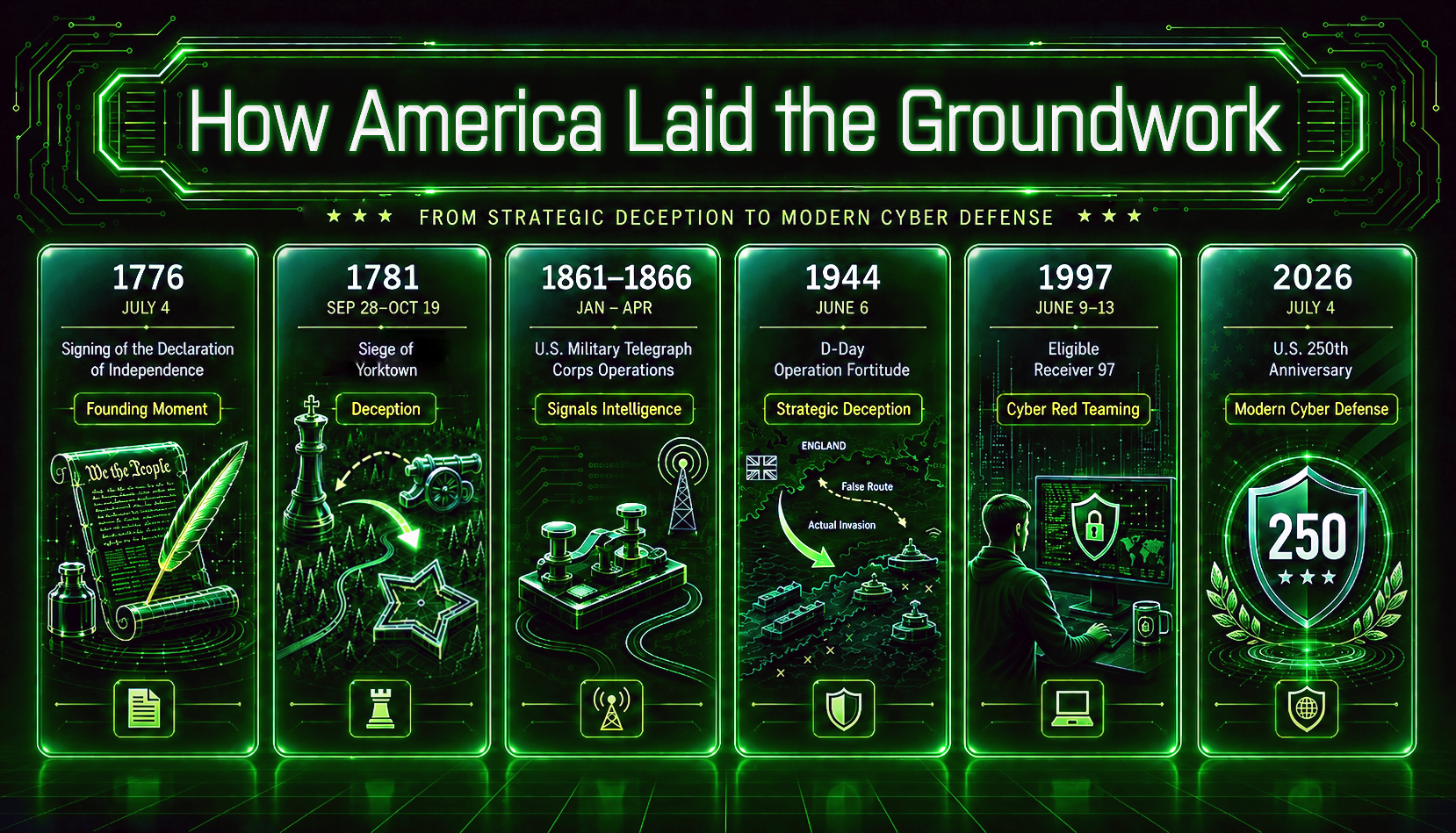
The modern cyber threat landscape is fast-paced, complex and ever evolving.
Today’s hacker has a litany of tools they can use to commit or prevent cyber crimes. Every text message sent, website visited, and file shared leaves behind a trail of digital information that can be scooped up and exploited. Protecting and understanding this information is one of defining challenges of the modern era.
Sophisticated warfare requires sophisticated tactics designed to anticipate cyber threats and create an organizational resilience designed to prevent the next one. Techniques such as penetration testing, signal intelligence, network exploitation and network monitoring did not rise up overnight; they evolved from decades of military intelligence practices dating back to the revolutionary war. Today, they form the foundation of modern cybersecurity.
To honor the 250th anniversary of the United States, we take a look at how these tactics were born and how they evolved throughout the years.
Timeless tactics
Intelligence tactics have been around since the dawn of warfare itself. For our purposes though we take a look at how intelligence tactics helped shape our nation’s history.
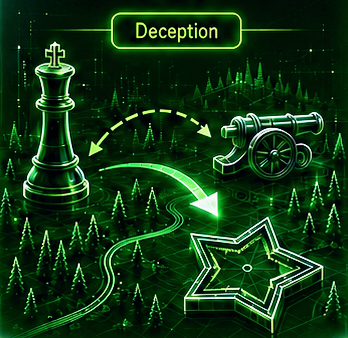
Siege of Yorktown — In the revolutionary war, the Siege of Yorktown is an early example of intelligence tactics winning the day. The siege would not have been successful had it not been for a deception campaign by General George Washington who essentially tricked Sir Henry Clinton, his British counterpart, into keeping his forces in New York while Washington and French allies surrounded General Cornwallis at Yorktown. Washington exploited Clinton’s network to reinforce the belief that he intended to attack New York and not Yorktown. This deception prevented Clinton from re-enforcing Cornwallis thus granting Washington the victory. In later years, Washington wrote, “much trouble was taken and finesse used to misguide and bewilder Sir Henry Clinton in regard to the real object.”
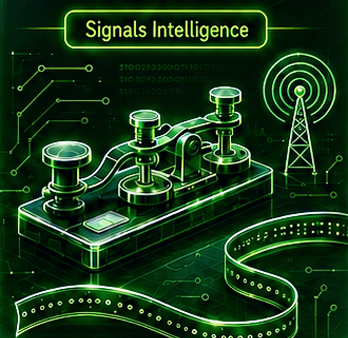
United States Military Telegraph Corps — Modern cyber tactics such as signal intelligence and network exploitation, like most military intelligence tactics, were born on the battlefield. The United States Military Telegraph Corps (USMTC) was created by the Union Army as a way to maintain communications between the federal government in Washington D.C. to the commanders in the field. Much like our use of groundbreaking technologies like the Internet of AI, the USMTC used the telegraph to boost intelligence services and win the war. While both sides in the civil war used the telegraph, the USMTC was especially successful in carrying communications back and forth and deceiving the enemy.
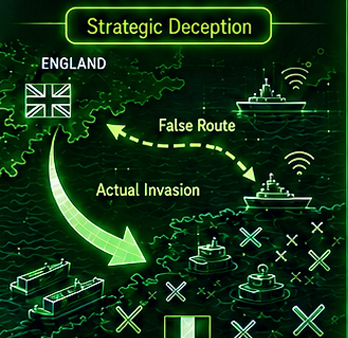
Operation Fortitude (laying the groundwork for D-Day) — Sir Winston Churchill once said “In wartime, truth is so precious that she should always be attended by a bodyguard of lies.” Leading up to the most important battle on the western front in World War II, was Operation Fortitude, a deception campaign by allied forces that misled German high command as to the real location of the invasion that would become D-Day. This operation created two phantom armies that were placed in key positions to divert axis attention away from Normandy and prevent quick reinforcement of their armies once the invasion began. A classic example of military intelligence, Operation Fortitude laid the groundwork for our modern intelligence services and serves as the ultimate example of how deception can be a more deadly weapon than any physical tool ever could be. It required complete integration of many facets of intelligence work, including misdirection in physical space with inflatable tanks, and with fake signals that corroborated the story that a vast army was being assembled that simply didn't exist. This also stands an early example of penetration testing where Allied forces probed enemy defenses to locate weak points for exploitation on the battlefield.

Eligible Receiver 97 — Eligible Receiver 97 more than anything discussed so far is the most direct example of cyber intelligence in modern society. Eligible Receiver 97 was an extremely successful war game that demonstrated a massive cyber-attack, hostage seizure and special operation raid that led to the creation of the United States Cyber Command. Within this exercise, U.S. agencies showed the effectiveness of modern cyber tactics and more than anything before, it showed the necessity for strategies such as pen testing, signal monitoring and exploitation.
Current importance of these tactics
The modern threat landscape is currently transforming yet again due to the rise of AI systems and more sophisticated cyber campaigns, phishing attacks on corporate America and the exploitation of virtually every U.S. industry. But the defenses we have today and the institutions we formed would not be nearly as effective if not for the people who fought to protect us since the inception of our great nation.
At WarCollar we are keeping apace with the shifting landscape!
Our HouseCat is an LLM that operationalizes AI for cyber engagements in denied, disconnected, intermittent, and limited (DDIL) environments, including air-gapped systems. The HouseCat turns operator language into command-line execution—entirely within the local system.
Sources:
https://www.dvidshub.net/news/431597/deception-and-battle-yorktown
https://historynet.com/wired-for-success/
https://www.nsa.gov/portals/75/documents/resources/everyone/digital-media-center/video-audio/general/civil-war-signals-transcript.pdf
https://www.britannica.com/event/Operation-Fortitude
https://www.iwm.org.uk/history/second-world-war/d-day/parachuting-dummies-and-inflatable-tanks
https://nsarchive.gwu.edu/briefing-book/cyber-vault/2018-08-01/eligible-receiver-97-seminal-dod-cyber-exercise-included-mock-terror-strikes-hostage-simulations
https://www.cybercom.mil/About/History/